How often do you write a paper check? A few times a month? Less? Debit cards, online bill-pay, direct deposit, and electronic checking accounts are making the paper check more and more obsolete. And soon, checks will vanish completely.
In Britain, banks are expected to vote today to eliminate paper checks by 2018. Ireland and some Scandinavian countries have already begun phasing out check payments.
Let’s face it: In today’s digital world, checks are slow, cumbersome, and a liability. (Where else can a thief get all of the information he needs to drain your bank account than from the front of any standard check?) [...]
Whether you’ve been on your own for a few days or a few years, try to avoid these common money mistakes young people make. Already made them? Don’t be hard on yourself; chances are you just didn’t know better (a big part of money smarts comes from learning from your mistakes). [...]
So two weeks ago, I announced I was looking for contributing bloggers and that I *gasp* got a real job. That said, I am pleased to introduce Money Under 30’s three new contributing bloggers. Simon, Carrie, and Stan will each be writing one post a week for the site.
About the Contributors
Simon, a 22-year old recent college grad, is a full-time editorial staff member at MyBankTracker and maintains his own personal finance blog, the Realm of Prosperity. Simon will be writing on a variety of personal finance topics from credit cards tips and tricks to saving money when you shop online.
Carrie hails from Kansas City, Mo., and is also an established personal finance blogger at her site Carrie…on the Cheap. In addition to bringing her personal experiences crushing debt and beginning to build net worth by age 26, Carrie is also in the final throws of studying for the CPA exam. She will be contributing great debt-reduction strategies, money-saving ideas, and oh-so-helpful tax tips!
Stan is new to blogging, but brings an impressive passion for investing. Before he even graduated from college, Y.S. was running his own investment fund for family and friends. He now works for a New York brokerage company and will be writing market commentary and how-to guides for young investors.
Look for their new posts next week! [...]
Even economists have a hard time understanding why cell phone companies charge what they do and, perhaps more importantly, why we pay it…all the while enduring spotty reception, abysmal customer service, and two-year service contracts.
Although the specifics of cell-phone pricing are intriguing and may remain a bit mysterious, the answer to the “why we pay” question really comes down to two points:
- We’re suckers for the latest and greatest gadgets (especially phones, which we can show off to all our friends), and we’ll pay anything to get them.
- We’re risk averse. We’re so afraid of going over our talk-time allowances one month and getting hit with a $200 cell phone bill that many of us are willing to pay $100 every month for unlimited talk time even if we only use, on average, 500 minutes.
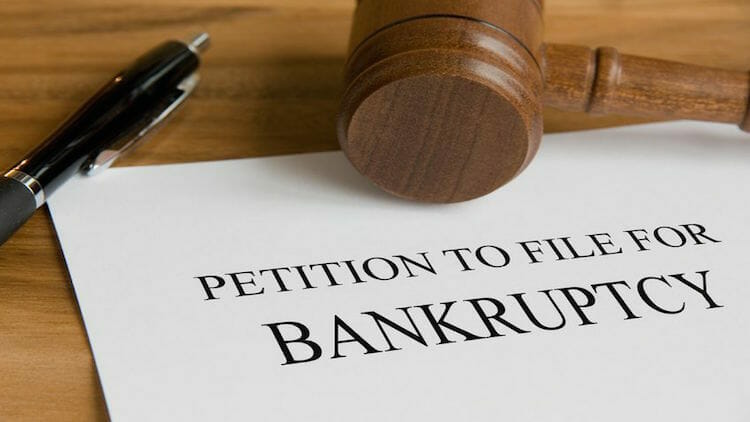
A few weeks ago I was listening to a financial radio show on a day when every other caller wanted to know if they should file bankruptcy.
One man was dealing with estranged spouses (yes, plural), a failed business, and hundreds of thousands in debt. It was no surprise he was considering bankruptcy. From there, however, callers’ reasons for wanting to file bankruptcy grew far less convincing. One caller even wanted to know if her 24-year old son should file bankruptcy over a $15,000 credit card debt.
Bankruptcy in this country has its place. Ideally, bankruptcy serves debtors who are in such a hole that there is truly no other way out. Unfortunately, however, many Americans see bankruptcy as the “easy way out” of debt—just like we snatch up diet pills and a lotto tickets.
If you’re struggling with a frightening amount of debt (or know somebody who is), here’s a quick reminder of why bankruptcy should still be avoided and only used as a true last resort. [...]
Exchange-traded funds, or ETFs, are sooo hot right now, and with good reason. ETFs allow investors to purchase an entire index with the same convenience and cost of buying a single stock. Are ETFs a wise move for you?
ETFs Defined
The “exchange-traded” part of exchange-traded fund means that investors can buy and sell ETF shares on major stock markets all day long. Unlike individual stocks, however, ETFs hold numerous companies that share a common bond. Stocks comprising an ETF may belong to the same index (like the Dow Jones Industrial Average) or all share the same size and industry (for example, small-cap financial stocks). [...]
I’ll be the first to admit that browsing the personal finance section at your local Barnes & Noble can be intimidating. There are hundreds of personal finance titles to choose from; it’s possible to spend a small fortune trying to learn to how to make a small fortune. But you don’t need to.
In my opinion, a few personal finance books stand out from the rest. Whether you need some broad financial motivation or a specific action plan on how to get out of debt, automate your finances, or start ingesting, there’s a book here for you. And, by the way, these books also make great gifts! [...]
FHA mortgage loans are mortgages that are guaranteed by the U.S. Government’s Federal Housing Administration. Thanks to this guarantee, FHA mortgage loans are often available to home buyers who do not qualify for “traditional” mortgages.
Authorized FHA lenders may approve borrowers with less-than-perfect credit and with as little as three and a half percent to put down for FHA mortgage loan. Although FHA loans were designed to serve low- and moderate-income home buyers who would otherwise have trouble getting a conventional mortgage; anybody can apply for an FHA loan up to FHA lending limits (by region).
As traditional lenders respond to the recession by making it more difficult to qualify for a mortgage, more borrowers are turning to FHA loans. That’s good news for able buyers, but it may not be good news for the recovering housing market in general. Recent reports indicate the FHA is losing money as current borrowers continue to default. (Anybody surprised?)
That said, you can still get an FHA loan, and with low mortgage rates and the $8,000 first-time home buyer tax credit and $6,500 home buyer tax credit in effect until next Spring; it’s still a very good time to buy a home. [...]
Hey fellow writers: Do you love explaining personal finance topics in clear, easy-to-understand language? Do mortgage rates, investing strategies, credit card terms, and debt repayment methods get you excited? Are you interested in earning a few extra bucks by writing one or two high-quality blog posts a week?
If so, consider applying to be a Money Under 30 staff writer.
Here’s the deal: [...]
We non-millionaires (last I checked, we’re still in the majority), may or may not find the prospect of such wealth alluring. Those of us swayed by the sirens’ song of riches may work hard to increase our income, invest wisely, and set a course to get rich slowly; others may fall for get-rich-quick schemes or play the lottery.
Many of us, however, do not really care if we join some club delineated by an arbitrary number with lots of zeros. Instead, we focus on building true wealth in every moment of our lives.
And true wealth, dare I say, is not number; it’s a state of mind. True wealth is the feeling of having enough—whether that’s money, fulfillment, family, or love—and being grateful for all you have.
There is a myth about millionaires that blogs, books, and the mainstream media perpetuate. The myth is that millionaires have it better. [...]

Recent Comments