
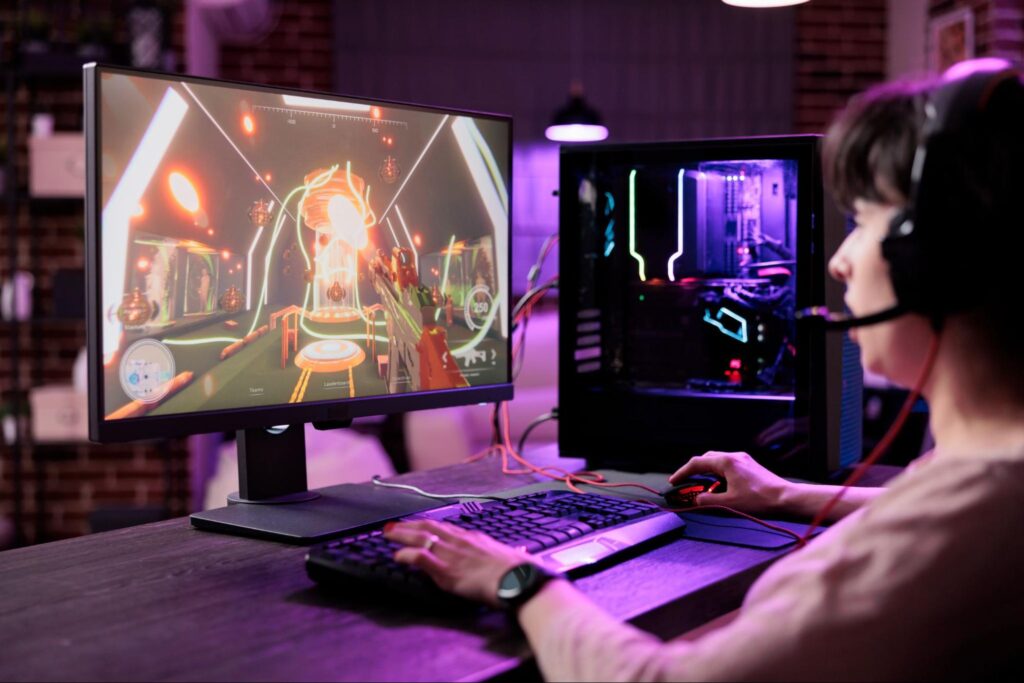
There was a time when playing video games with friends meant gathering in someone’s living room, sharing controllers and arguing over whose turn came next. Those afternoons haven’t disappeared, but friends can now meet online after work, compete against strangers halfway around the world or spend an evening watching someone else play. There are even opportunities to make money playing games through rewards programs, although the earnings depend on the program’s terms.
A game no longer has to end when everyone goes home. Friends can keep talking through messages and online communities, sometimes for years after they’ve stopped playing the game that brought them together.
How Online Multiplayer Gaming Changed Friendships
Before widespread home internet access, playing against someone usually meant having another person in the room, unless the game offered computer-controlled opponents.
In Minecraft, friends living hundreds of miles apart can build a shared world, returning whenever they have time. One person might spend an evening constructing a house while another explores for materials. Neither has to be online at the same moment for the project to continue.
Anyone who’s played with the same Fortnite squad for a while knows how that goes. You figure out which teammate rushes into every fight, who hangs back, and who somehow manages to get everyone eliminated. Sometimes those random teammates become people you play with every night.
And plenty of those friendships stick. A 2024 Pew Research Center study found that 47% of teenage gamers in the U.S. had made a friend online through gaming. The study also found that 89% played with other people, whether online or in person.
Streaming and Esports Made Gaming Worth Watching
Some games become popular because they’re good. Others get their big break because a streamer plays them and something ridiculous happens on camera. A single clip can send thousands of people looking for a game they’d never heard of the day before. Among Us is a good example. It had been available for two years before streamers helped turn it into a massive hit in 2020.
Watching games has become its own pastime. Plenty of people tune into Twitch or YouTube to follow a favorite creator, even when they have no intention of playing the game themselves. They might stick around for the commentary, the chat, or the sheer entertainment of watching somebody spend three hours trying to beat one boss.
Esports take that audience in another direction. Rocket League and Valorant have competitive scenes with professional teams, dedicated fans, and major tournaments. Fans follow their favorite players, argue about team changes, and get invested in rivalries that can last for years.
In December 2021, the South Bend Tribune covered the PWR Up South Bend gaming conference at Indiana’s Bendix Arena. Visitors could meet developers, participate in tournaments, and try games together. The event also included discussions about game development.
Gaming Communities Have Become Places to Learn and Create
Anyone who’s spent an hour stuck on the same level knows the temptation to look up the answer. Chances are, someone on Reddit has already figured it out, and there is probably a walkthrough on YouTube. Discord also has dedicated communities for games that are still active years after their release.
Some discussions can get surprisingly technical. Players spend hours testing different builds, comparing strategies, and picking apart updates to see what’s changed. Guides can turn into enormous community projects, with people contributing corrections, screenshots, and discoveries long after the original post went up.
And not everybody is there looking for advice. Some players would rather make something of their own, whether that’s a custom map, a mod that changes how a game works, or artwork inspired by a favorite character. Those creations get passed around, improved upon, and occasionally become popular enough to attract people who haven’t played the original game.
Digital Gaming Economics Changed Spending and Rewards
Many games now offer purchases beyond the initial download or retail price, including character outfits, expansion packs, and seasonal content. A free-to-play game can provide hours of entertainment without requiring payment, although optional purchases can add up.
Anyone who’s spent money on a rare skin or limited-edition item knows how quickly a few small purchases can add up. Some games let players trade or resell certain items, although what they’re worth depends on demand and the rules of the marketplace. An item that was popular last month might be difficult to sell today.
There’s money on the other side of gaming, too, but earning it isn’t necessarily easy. Winning money at tournaments is one thing. Making a living from streaming is another, and it can take months to build an audience that brings in much income.
For people who just want a little something back from the time they spend gaming, rewards programs are another option. Some let players earn points toward gift cards, though the payouts tend to be small. And depending on the program, they may have to save up quite a few points before they can redeem anything.
The Problems That Come With Connected Gaming
Online gaming also exposes players to harassment, scams, and account theft, especially when they communicate with strangers through voice chat or direct messages.
The problems aren’t limited to adults arguing over headsets, either. In a 2024 Pew Research survey, 41% of teenage gamers reported being called an offensive name while playing. Just as many said gaming had interfered with their sleep.
Then there’s the money. Kids can burn through virtual currency without realizing what they’re spending in real dollars, especially when purchases take only a couple of clicks. The Federal Trade Commission warned about unexpected gaming charges in 2025 and advised parents to check game ratings and set purchasing restrictions.
The next big change in gaming might come from technology nobody’s using yet. Twenty years ago, few people would have expected watching strangers play video games to become a full-time hobby, much less a career. It will be interesting to see what players will be doing twenty years from now.
More For You
- Does Burial or Cremation Make More Financial Sense?
- Can being an authorized user on someone else’s credit card help you build credit?
- 5 Mutual Funds To Get You Started
- Insurance 101: 10 Types Of Insurance Everyone Under 30 Should Understand
- 6 Investment Scams Young Adults Are Likely to Encounter
- Do My Parents Make Too Much Money For Me To Submit The FAFSA?
- What is a ‘Good’ Credit Score, Anyway?
- What Young Professionals Should Know Before Relocating