
It’s always better to pay cash for large purchases, which is why we drill home the importance of saving as early and as often as you can.
But life happens – whether you’ve saved for it or not. Sometimes credit will be a valuable safety net to help you ride out financial emergencies or a tool to finance a big purchase – a car, a once-in-a-lifetime vacation, or a small home improvement project.
When these situations arise, most of us simply reach for our closest credit card. Though credit cards are convenient, in some cases a personal loan may be a more sensible and affordable way to pay for a large purchase over time.
Here’s a look at personal loans vs. credit cards and the pros and cons of each.
How are personal loans different than credit cards?
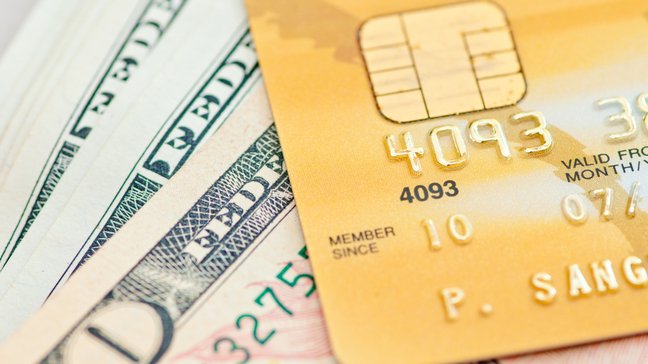
A credit card is a line of credit from which you can borrow money at any time, up to your credit limit. A personal loan is a fixed loan which you repay in equal installments for a predetermined period of time.
A credit card is what’s known as revolving debt. A credit card has a credit limit that you can use as often as you like and it’s up to you to pay the entire balance off at the end of the month. If you don’t, you begin to “carry a balance” – you’re paying interest on a debt but you still have the ability to make new purchases.
A personal loan, on the other hand, is a fixed debt. You receive a fixed amount of money and repay it in equal installments over a fixed number of months.
The danger with credit cards, of course, is that you can always charge more at any time up to your credit limit, keeping you stuck in debt.
Many consumers fall into the habit of carrying a balance of credit card debt. According to Experian, 75% of U.S. adults have a credit card balance greater than zero. As the most popular form of debt, credit card debt has been growing for the past decade. But credit card balances have been seeing a dramatic drop in the last few years.
With a personal loan, you know when your debt will be repaid and that you can’t borrow more money without completing a new loan application. Nearly a quarter of U.S. adults have a personal loan.
Like a credit card, a personal loan is unsecured, as opposed to an auto loan or a mortgage, which are secured by the vehicle or real estate they are used to finance. The difference is if you stop paying a secured loan, the bank can repossess your car or foreclose on your house. For this reason, interest rates on personal loans are higher than secured loans but, in some cases, personal loan APRs can be lower than credit card rates.
When is a credit card better than a personal loan?
Credit cards are best for making smaller purchases or consolidating smaller debts – up to a few thousand dollars – that you can comfortably repay within a year.
If you’re making a purchase of between a few hundred and a couple of thousand dollars that you can repay in a year or so, the cheapest way to do it may be to apply for a credit card that offers a 0% intro APR on purchases. If you have good credit, a 0% credit card gives you an interest-free loan as long as you repay the debt in full before the introductory period expires.
The same is true if you want to consolidate debt with a credit card balance transfer. If the debt is less than a few thousand dollars and you can pay it off in 18 months or less, a 0% balance transfer credit card will be your best bet.
Plus, a revolving debt like credit card debt tends to carry more weight in your credit score than installment loans. With that, responsible credit card management could lead to an increase in your credit score quickly.
When is a personal loan better than a credit card?
Personal loans are best for larger purchases that will take you more than a year to repay or when you don’t want to be tempted to overspend with a credit card’s open credit limit.
If you need to borrow $1,000 or more and need more than 15 months to pay it off or you need to borrow $5,000 or more, which is higher than the credit limit on many credit cards, a personal loan is a better option.
With most personal loan lenders, $1,000 is the minimum amount you can borrow. If you have good credit, you can find personal loans for up to $100,000. On average, borrowers owe an average of $19,703 in personal loan debt.
The biggest downside to some personal loans is that they may charge an origination fee of between 1%-5% of the loan amount. This is a one-time fee that is paid in cash or from your loan proceeds at the time of closing. Not all lenders charge an origination fee on personal loans, but you need to ask about the fee and take it into account when comparing interest rates. One lender that offers you a better APR may actually be more expensive if they charge a fee and the lender with the higher APR does not.
How to find the best personal loans
The best personal loan lenders require good credit and are transparent with their rates and fees.
Finding a personal loan is extremely easy these days, thanks to the rise of online lenders that can provide personalized rates and loan amounts in minutes, with no impact on your credit score.
If you want to get the best personal loan offers, then working to improve your credit score is a good idea. The average credit score was 689 for consumers with personal loans in 2022. Although you can most definitely find personal loan opportunities with lower credit scores, you’ll be missing out on the best loan offerings.
How do personal loans work?

A personal loan is an unsecured loan that you can use for just about any purpose: Debt consolidation, a vacation, a vehicle purchase, or a home improvement project.
A personal loan works more like an auto loan than a credit card.
- When you take out the loan you receive the loan amount in a lump sum.
- You make fixed monthly payments for the agreed-upon term (number of months).
- Personal loans usually have terms between two and five years.
- Personal loans usually have a fixed interest rate.
- There is no penalty for paying off the loan early.
Typically, you can apply for a personal loan entirely online. To apply, you’ll need to provide your personal and employment information on an online credit application. The bank may ask to see proof of your income, such as a pay stub or W-2 form. Generally, the bank will let you know if you’re approved within one or two business days.
At this point, you’re under no obligation to take the loan – you usually have a week or so to decide. You can review the interest rate and terms of the loan and decide whether it fits your needs. If you accept the loan, you’ll sign a promissory note and the money will be transferred into your checking account. You’ll then receive billing statements and must make equal payments each month on the due date.
Most personal loans come in terms of three or five years, but you can find some with terms as short as one year or as long as ten years. Finally, reputable lenders will not charge a pre-payment penalty, meaning you can pay off your loan in full at any time to save money on interest.
Summary
Personal loans are unsecured fixed-term loans that you can use for just about any purpose – paying for your wedding, remodeling your home, or taking a trip. Depending on your credit score, a personal loan may or may not have a lower interest rate than a credit card, but it can still be a safer financial tool because you’re paying off your debt in equal installments each month.
Credit cards are still the better tool for making purchases or consolidating debts that you can pay off rather quickly, especially if you can take advantage of a 0% intro APR.
» MORE: Find the best rate on a personal loan or compare today’s best credit cards.
